

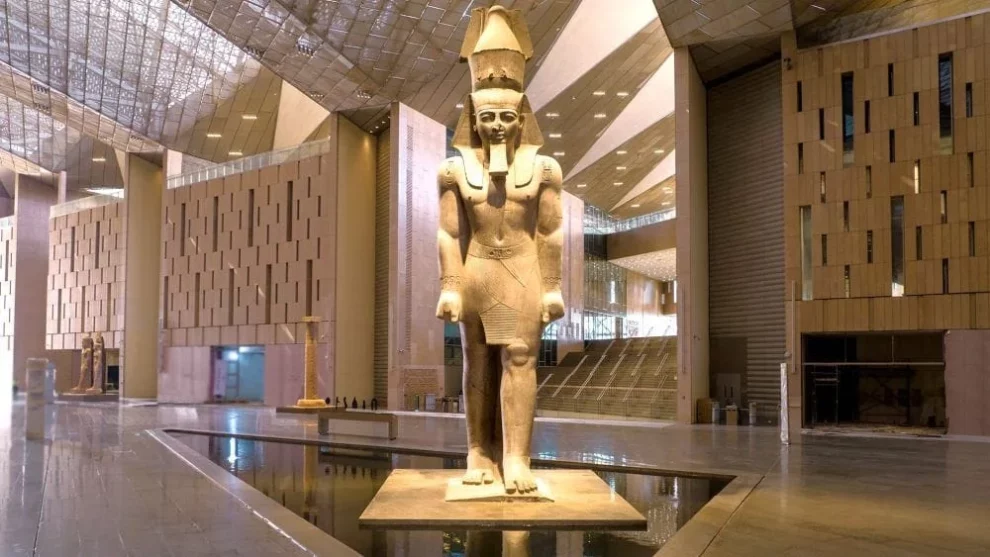

From 18 to 20 October
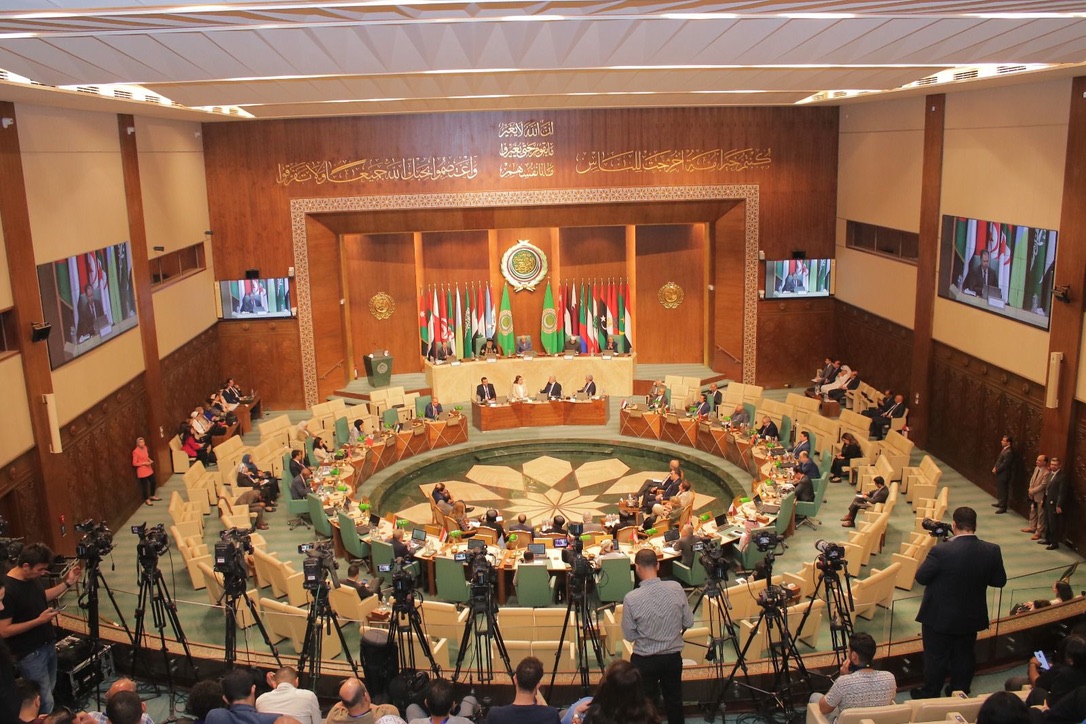
From 18 to 20 October, the III MIL & Global Understanding Conference: Peace for All will bring researchers, policymakers and educators from across the world to Cairo. It is the Arab States Regional Event of UNESCO’s Global MIL Week 2026, and it will see the launch of a new scientific association for the field.
There are moments when a research field realises it can no longer work in separate rooms. Media and Information Literacy (MIL) has reached one of them. Generative AI is rewriting the conditions under which information is produced, disinformation and hate speech travel faster than any correction, and polarisation is wearing down the trust on which democratic life depends. In this context, the question is no longer whether MIL matters. The question is whether those who study it, teach it and design policies for it are able to think together.
That is the wager of the III MIL & Global Understanding Conference: Peace for All, to be held at the InterContinental Cairo Semiramis, on the banks of the Nile, from 18 to 20 October 2026. The Conference is co-directed by Samy Tayie (Arab Academy for Science, Technology and Maritime Transport, AASTMT) and José Manuel Pérez Tornero (Universitat Autònoma de Barcelona). It is the Arab States Regional Event of UNESCO’s Global Media and Information Literacy Week 2026.
Three days, three ways of working
The Conference is built on a simple idea: policy, research and youth engagement need each other. Each day is devoted to one of them.
Sunday 18 October – the MIL Global Policy Forum. After the Opening Ceremony and a High-Level Panel, the day is given over to four roundtables. Each brings together experts from different world regions, from Latin America to the Arab world, and from Europe to Africa and North America, around one of four questions:
- MIL and Peace Education in AI-Mediated Societies: what does it mean to educate for peace when the information environment is increasingly shaped by algorithms?
- AI, Disinformation, Hate Speech, Polarization and Democratic Resilience: how can societies protect public debate without restricting freedom of expression?
- Algorithmic Governance, Ethics, Transparency and Accountability: who answers for the decisions of automated systems, and how can citizens understand them?
- Technological Innovation and Global Citizenship in the Digital Era: how can innovation serve citizenship rather than erode it?
The format is deliberately demanding. Each moderator also acts as rapporteur, and the Co-Directors close the day by presenting its conclusions. The aim is not to accumulate speeches but to produce shared ideas that can feed into public policy.
Monday 19 October – the Congress. The second day hosts the Official Congress of the Global MIL Scientific Association, in an International Hall where the communications selected by the Scientific Committee will be presented in three roundtables:
- MIL Research: Theory and Method
- AI, Citizenship and Youth
- MIL in Education and Living Spaces
In parallel, two Arabic-language halls will hold sessions on language and MIL to counter misinformation, on artificial intelligence, on media ethics, on intercultural and interfaith understanding, and on lifelong learning, the latter in collaboration with the League of Arab States. The two sides of the day are designed to work together: an international scientific conversation alongside the voices of the Arab region, in their own language.
Tuesday 20 October – Young Peace Ambassadors and Closing. The final morning belongs to the Young Peace Ambassadors Initiative, prepared by students from several universities, who will present their own proposals. The Conference then closes with a session whose title sums up its ambition: “New Momentum for MIL: Peace for All.”
A selection that takes science seriously
Behind the programme lies a careful selection process. The call for communications received 54 abstracts from more than a dozen countries. Each was assessed by the Scientific Committee in three stages: alignment with the purpose of the Conference, fit within the research track, and quality as a scholarly communication. Many authors were asked to revise their proposals. Those accepted then had to submit a short paper of about five pages, which was reviewed with a common grid that gives decisive weight to scientific soundness: theoretical anchoring, method, evidence and coherence.
The Congress sessions have also been designed for debate rather than display. There are no slides: each speaker has about ten minutes, followed by an extended joint discussion. The texts circulate in advance, so that moderators and participants arrive prepared. The final papers will form the Proceedings Book of the Global MIL Congress, subject to their own peer review.
The communications cover an unusually wide range:
- the measurement of MIL and the “wicked problems” of evaluating it;
- algorithmic literacy co-created with teachers and students;
- the epistemology of journalistic practice;
- AI literacy in universities and schools;
- civic participation of young people in the age of generative AI;
- MIL in cities and inclusive classrooms;
- the methodological challenges of surveying young people’s trust in science and information.
The birth of a scientific community
What makes Cairo 2026 more than one more conference is its institutional horizon. The Congress will see the launch of an international scientific association devoted to Media and Information Literacy. It is conceived as a permanent space where researchers from all regions can build a shared theoretical and methodological framework, accumulate comparable data and connect evidence with policy.
The selection of communications was made with this in mind. Alongside the quality of each paper, the Committee looked at how it could help lay the foundations of a common research agenda for the years ahead.
For a field that has grown rapidly but often in fragments, divided by language, by discipline and by the gap between academia and policy, this is an important step. And it is significant that it is taken in Cairo, in a region where MIL has been the object of sustained, pioneering work for many years.
Why the scientific community should pay attention
The title of the Conference, Peace for All, is not a rhetorical flourish. It expresses a conviction shared by its organisers: the ability to access, understand, question and create information is a condition for living together. Without it, societies are left defenceless before manipulation, fear and the logic of confrontation.
Cairo 2026 invites the MIL community, and all those who care about the quality of public life, to follow its debates, read its conclusions and take part in the new association that will emerge from it. Over three days, the banks of the Nile will be the meeting point of a community that is learning to think and act together.
MIL Magazine will report on the Conference sessions, conclusions and the launch of the new scientific association.





Add Comment