


A Conference Interrupted by War
The III MIL & Global Understanding Conference: Peace for All was originally scheduled for April 27–29, 2026, organized by the Arab Academy for Science, Technology and Maritime Transport (AASTMT) and the Universitat Autònoma de Barcelona (UAB), in cooperation with the League of Arab States, the UNESCO MIL Alliance, the UNITWIN MILID Network, and the MIL Institute. It was conceived to build directly on two previous milestones — the 2024 Cairo Conference and the 2025 Barcelona Conference — and was structured around two complementary spaces: a MIL Global Policy Forum on “AI for Peace and Global Understanding” and the Official Congress of the Global MIL Scientific Association, dedicated to “New Challenges in MIL Research.”
Then came the war.
As tensions between the United States, Iran, and Israel escalated in the spring, the organizing institutions faced an outcome few had anticipated: a conference built around strengthening peace through media and information literacy had to be suspended because of an active war in the region. For a process explicitly conceived to advance intercultural dialogue and democratic resilience, the irony was not lost on the organizers — nor was the frustration of watching a carefully built academic and diplomatic bridge go unused at the very moment it was most needed.
Looking Back: Cairo 2024 and Barcelona 2025
The Cairo 2026 conference is the third chapter of a process that began two years earlier, and it is worth recalling how the story unfolded.
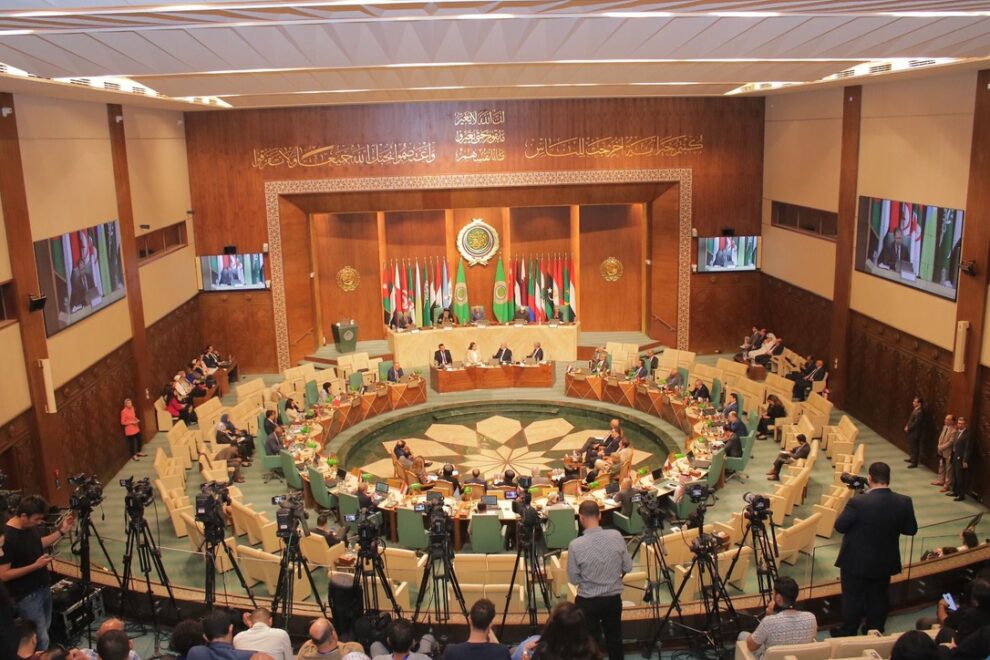
Cairo 2024 — Laying the Foundations. The first edition, “Media & Information Literacy & Global Understanding: Peace for All,” was held in Cairo from April 22 to 24, 2024, organized by UNESCO’s MIL Alliance (Arab Chapter) together with AASTMT and UAB. The conference brought media professionals, academics, and institutional stakeholders together around a central idea: that journalism and media have the power to dissolve prejudices and stereotypes that foster hatred and confrontation, and to advance mutual understanding between countries and social groups by combating misinformation and hate speech. Particular weight was given to inter-religious dialogue as a precondition for genuine global understanding. The gathering closed with the adoption of the Cairo Declaration for Global Understanding and Peace, summarising the conference’s key points for international dissemination and outlining a concrete action programme developed throughout the following year.
Barcelona 2025 — From Declaration to Action Plan. One year later, the process moved to Spain. The Second International Conference on Media and Information Literacy and Global Understanding was held at the Universitat Autònoma de Barcelona on April 28–29, 2025, gathering over 100 international experts and representatives from 50 universities and institutions, with institutional support from Spain’s National Cybersecurity Institute (INCIBE) and the UNESCO MILID Network. Held amid escalating global tensions and rising polarization, the Barcelona conference sought to move from discussion to concrete action by producing what became known as the MIL Action Agenda. Its stated goals included strengthening global cooperation among MIL organizations and networks, establishing a Common Action Plan for critical thinking and intercultural dialogue, developing a Global MILID Research Agenda to inform policy and education, and formulating an ethical and civic commitment to responsible engagement with digital media and artificial intelligence.
Together, Cairo 2024 and Barcelona 2025 form the backbone that the October 2026 edition now builds on: a first declaration establishing shared principles, followed by a working agenda translating those principles into research priorities and institutional commitments.
A New Date, A New Context
Now, with a memorandum of understanding reportedly in place between Iran and the United States aiming to secure a medium-term peace, the conditions have shifted enough for the conference to be reconvened. The Organizing Committee has set new dates: October 18–20, 2026, in Cairo.
The rescheduling brings more than a change of calendar. The conference will now be held as a central component of UNESCO’s Global MIL Week 2026, whose overarching theme this year — “It Takes a Village: Advancing Media and Information Literacy for the People” — emphasizes decentralized, multistakeholder action across regions. Within that framework, Cairo has been designated as the Arab States regional event, under the banner “MIL Global Understanding: Peace for All — UNESCO Chairs and Academic Cooperation on MIL.” This gives the conference direct institutional backing from UNESCO and its global networks, expanding its reach well beyond the original April format.
Learning from Cartagena: The Precedent of Global MIL Week 2025
The Cairo gathering will not be starting from scratch in terms of ambition. Last year’s Global MIL Week Feature Conference, held in Cartagena de Indias, Colombia, on October 23–24, 2025, under the theme “Minds Over AI – MIL in Digital Spaces,” offered a clear template for what a large-scale MIL gathering can achieve. Hosted by UNESCO and the Government of Colombia, the event welcomed more than 1,000 in-person participants from around the world and combined plenary sessions with 30 partner-organized side events that broadened MIL advocacy across sectoral priorities and emerging issues.
Cartagena’s programme opened with a debate led by sixteen students reflecting on how artificial intelligence is reshaping their future, and closed with a session on “Peace and Inclusivity in Digital Times,” where experts underscored how MIL can help counter disinformation, hate speech, and discrimination, particularly in fostering resilient communities amid ongoing global crises and conflicts. The conference also revived UNESCO’s Global MIL Alliance and closed with the Youth Hackathon Award Ceremony, reinforcing the role of young people as protagonists rather than mere beneficiaries of the MIL agenda. It is precisely this combination — high-level policy dialogue, rigorous academic exchange, and youth leadership — that Cairo 2026 now seeks to replicate on Arab and Mediterranean ground, with an added emphasis on peacebuilding drawn from its own regional context.
UNESCO’s Core Axes of Action on MIL
The Cairo conference is anchored in a broader institutional architecture that UNESCO has been building for over a decade. UNESCO’s work on Media and Information Literacy rests on several interconnected pillars: the development of national policy and strategy guidelines that help Member States integrate MIL into legislation on access to information, freedom of expression, and digital technologies; the promotion of global curricula standards, including the Model MIL Curriculum for Educators and Learners, now updated to address artificial intelligence and generative AI; a Global Media and Information Literacy Assessment Framework, which allows countries to measure citizens’ MIL competencies and track progress; and the Global Alliance for Partnerships on Media and Information Literacy (GAPMIL), which connects governments, media, academia, and civil society across borders.
To these are added more recent lines of action: the MIL Cities Initiative, which turns municipalities into local hubs for MIL learning, and a growing effort to engage digital content creators as trusted intermediaries in the information ecosystem. A UNESCO Issue Brief released for Global MIL Week 2025 underlined how uneven this progress still is worldwide — only 9 out of 54 African countries and 15 out of 46 in Asia and the Pacific have introduced MIL elements into national curricula — a reminder that gatherings like the one planned for Cairo remain essential to closing persistent regional gaps.
What Will Change — and What Will Stay the Same
The core architecture of the suspended April conference will be preserved. The MIL Global Policy Forum will retain its focus on AI’s impact on communication ecosystems, democratic governance, intercultural relations, and human security, organized around high-level panels, policy dialogues, and multistakeholder roundtables. The Scientific Congress will continue to offer a peer-reviewed academic platform, with research tracks spanning MIL and education, children and youth, democracy and civic engagement, intercultural and interfaith dialogue, epistemologies and methodologies in MIL research, and regulation and public services.
What is new is a dedicated section built specifically around institutional cooperation: a space to strengthen the network of UNESCO Chairs and UNITWIN programmes working on Media and Information Literacy worldwide, and to explore avenues for deeper academic collaboration — including discussion of a future international MIL scientific association. This addition reflects a broader ambition for the October edition: not only to resume the dialogue interrupted by war, but to consolidate the scattered global infrastructure of MIL research and teaching into a more connected, cooperative body.
A Symbolic Return
For a process born out of a declaration for peace, the return to Cairo carries a particular symbolic weight. A conference about resilience, dialogue, and the responsible use of information technology was itself paused by the very kind of conflict it exists to help prevent. Its resumption — timed to a fragile but real diplomatic opening, and building on the momentum generated in Cairo, Barcelona, and Cartagena before it — is, in that sense, as much a statement as any panel on its as any panel on its agenda.






Add Comment